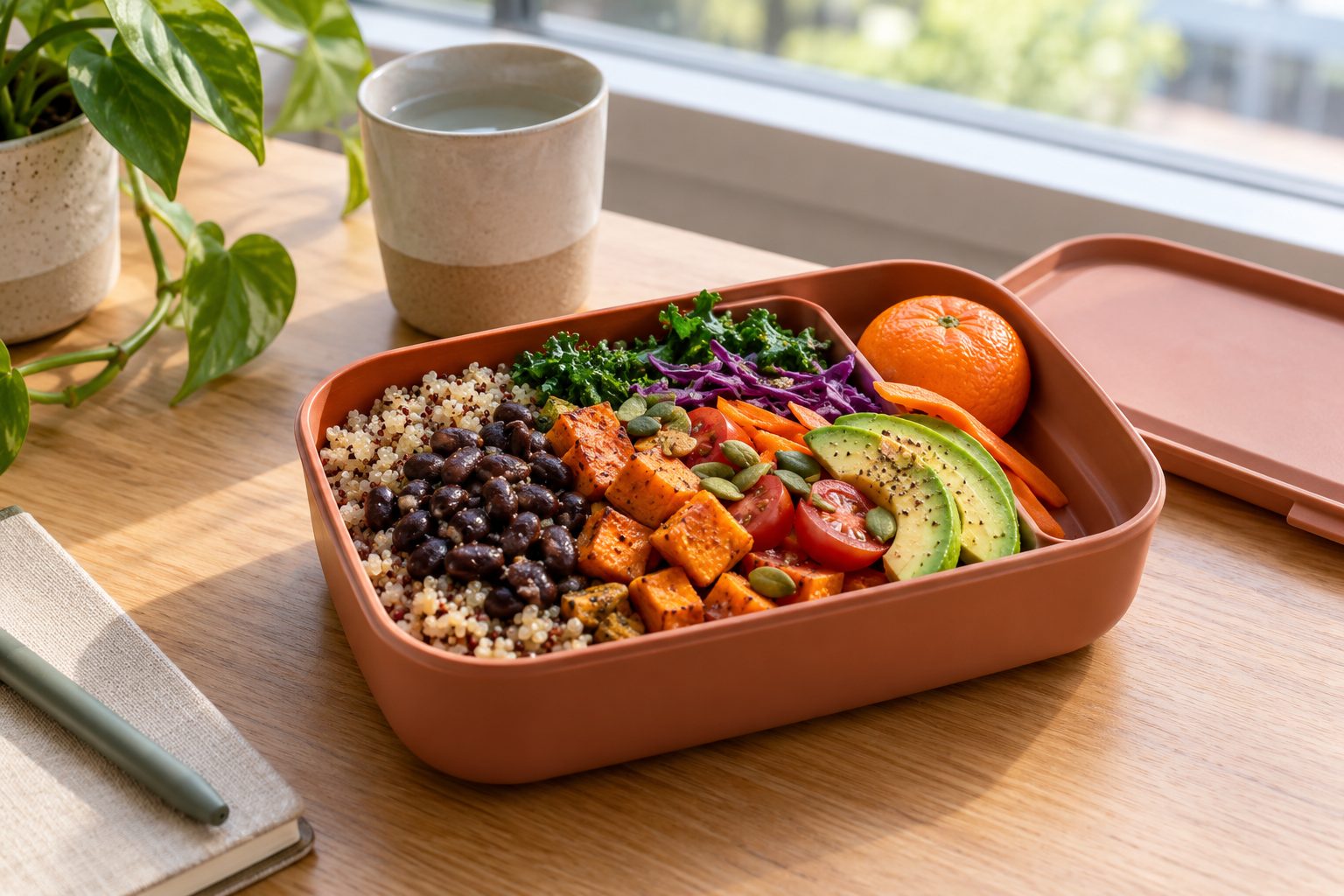
Packing lunch can feel straightforward until lunchtime arrives. The salad is awkward to eat, the microwave has a queue, or the meal you prepared feels unappealing. It is easy to conclude that you are simply bad at planning. A more useful question is whether the lunch matched the conditions of your day.
Planning a workday lunch is an opportunity to learn what makes a meal workable for you. You can think through the setting, build a combination you enjoy, and make a small adjustment after trying it. The aim is a lunch you can repeat with confidence, while leaving room for different days and appetites.
Describe where lunch will happen
Before choosing a recipe, describe your lunch setting. Can you refrigerate food? Can you reheat it? Do you have a table, a quiet break, and the utensils you need? A soup that works beautifully at home may be inconvenient if you have nowhere comfortable to set down the container.
Choose a format that fits those answers. A sandwich, a bowl, and a collection of separate foods each ask something different of your break. If you have very little assembly space, prepare the food in the form you intend to eat it. Follow storage and handling instructions for the ingredients you use.
Also ask whether lunch must survive a changing schedule. If your break moves around, the practical arrangement matters. You may need access to appropriate storage more urgently than you need another meal idea. Solve the setting first so your recipe choice has somewhere to succeed.
Choose the food you want at the center
Start with something you genuinely like: a lentil dish, rice, pasta, a sandwich, or a familiar family recipe. Then imagine the whole meal around it. What would add a flavor or texture you enjoy? What can you prepare with the ingredients and equipment you already have?
WHO guidance emphasizes dietary variety while recognizing that healthy eating takes different forms across cultures and circumstances. You can use that principle to look beyond repeating exactly the same combination, without abandoning familiar meals. [1]
For example, a rice bowl might include tofu and vegetables with a dressing you enjoy. A sandwich might have a filling you like and fruit alongside it. These examples are planning prompts rather than a formula for everyone's nutritional requirements. Your portions and choices will depend on your own needs.
Follow one example through the decisions
Imagine that you want to take a bean wrap to work. First, check the container. Will the wrap fit without being crushed? Next, consider the filling. If it seems wet, you might prefer to carry one component separately and assemble it where you have space.
Now think about flavor. Perhaps you enjoy beans with lime, cumin, and a little salsa. That combination may make the lunch more appealing to you than a filling chosen only because it appeared on a meal plan. Decide which parts you can manage before work and which need preparation earlier.
Finally, consider the amount you pack. Treat your first attempt as information. If it does not suit your appetite, you can adjust the next version. There is no need to interpret a mismatch as a failure of the entire idea or as evidence that you lack discipline.
Give convenience a clear role
Convenience foods can solve a specific obstacle in your plan. A ready-to-use ingredient may be worth buying if chopping or cooking that ingredient is what keeps the meal from happening. Name the obstacle so you can judge whether the purchase actually helps.
If you compare packaged components, use equivalent serving amounts before comparing their nutrients. The FDA's label guide explains how servings relate to the numbers on the package. [2] This matters when one container appears lower in a nutrient simply because its listed serving is smaller.
You can then weigh the full choice: price, preparation, flavor, storage, and the nutrition information relevant to you. A product does not need to win every comparison to serve a useful purpose. Equally, an expensive convenience item may offer little benefit if the preparation step was never a problem.
Review the meal while the details are fresh
After lunch, ask yourself three ordinary questions. Was it easy to eat? Did you enjoy it? What would you change next time? These questions keep your review connected to the actual meal, rather than a vague judgment about whether the day was healthy enough.
Be precise. “Too much chopping before work” suggests preparing a component earlier or choosing a different ingredient. “The filling was fine, but the wrap became soggy” points toward assembly. “I wanted something warm” suggests changing the format while keeping some of the ingredients.
You may notice appetite or comfort too, but a single lunch cannot establish why you felt a certain way. Use the observation to decide what to explore next. Persistent symptoms or concerns deserve individual advice rather than repeated experiments with an increasingly restricted list of foods.
Plan for the day you do not pack lunch
An ordinary workweek may include a forgotten container or an unexpected meeting. Identify an accessible alternative before you need it. You could look at the menu of a nearby place or keep suitable shelf-stable food available, following its storage instructions.
The backup should fit your actual budget and break. It does not need to resemble your packed lunch. Its purpose is to reduce uncertainty when your first plan becomes impractical. For help choosing the ingredients you buy regularly, see how to make a grocery list from meals you use.
Choose one lunch format for your next workday and check that you have the storage, container, and utensils it needs. After eating it, identify one adjustment. That small loop of planning, trying, and noticing is enough to begin.
Sources
- [1] World Health Organization. Healthy diet. Updated January 26, 2026.
- [2] U.S. Food and Drug Administration. How to Understand and Use the Nutrition Facts Label. Accessed November 1, 2026.