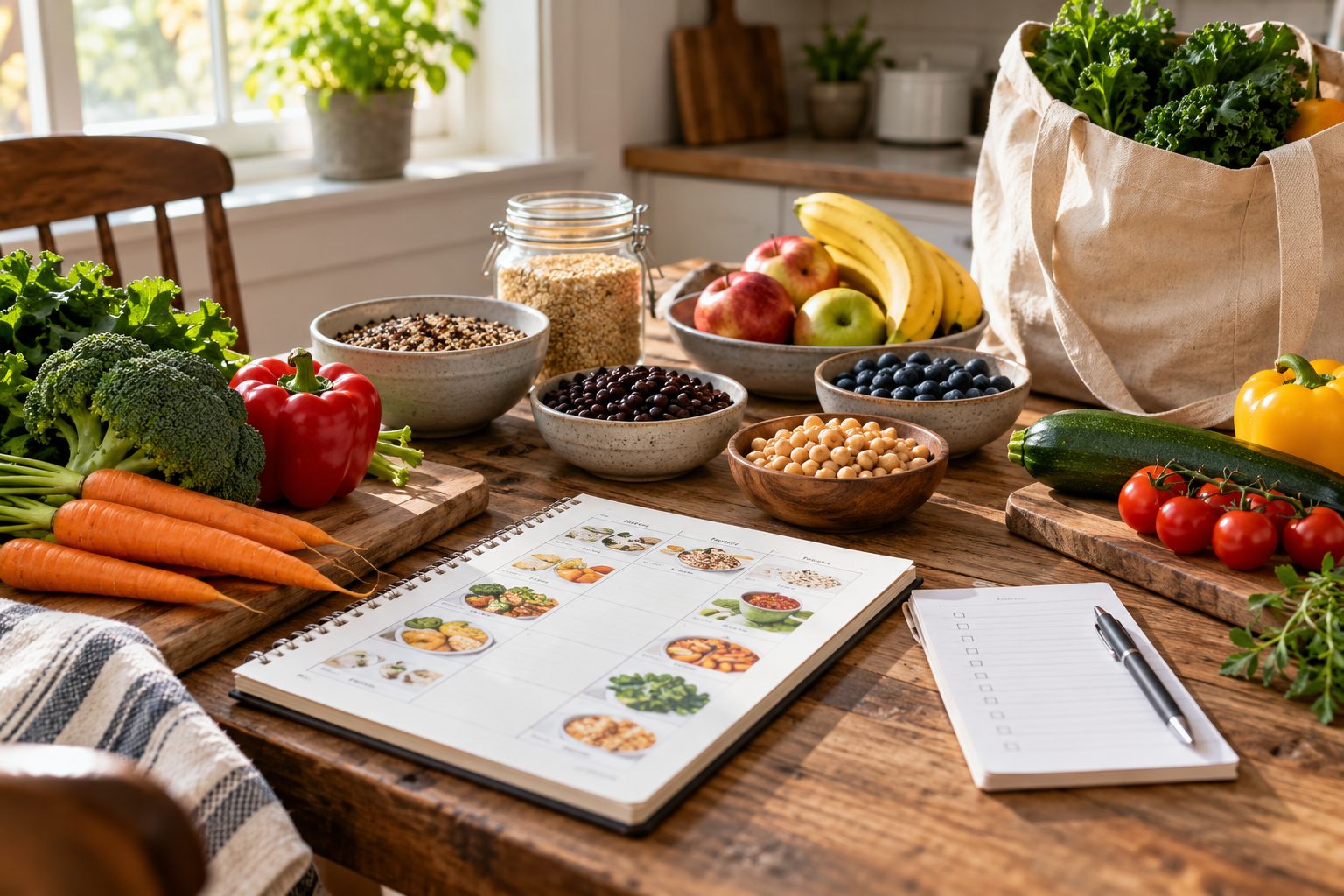
You leave the shop with bags of promising ingredients, then struggle to turn them into dinner. One recipe needs something you forgot. Another asks for more preparation than the evening allows. By the end of the week, some of the food still has no clear purpose.
A useful healthy grocery list connects ingredients with meals you expect to make. You can build that connection by looking at your schedule, choosing familiar dishes, and checking what is already available. The process becomes a learning exercise when you review what you actually used and adjust the next list.
Start with the week before the food
Look at the days ahead and identify when you are likely to prepare food. Be honest about late evenings, appointments, shared meals, and access to a kitchen. A shopping list designed for an imaginary quiet week can become difficult to use as soon as ordinary life arrives.
You do not need to plan every mouthful. Choose a few meals that would solve recurring decisions. Perhaps you need breakfast before work, a lunch you can pack, and dinner on the evenings you cook. Leave room for changing plans and meals you already know will happen elsewhere.
Give each planned meal a realistic level of effort. If Tuesday is usually rushed, choose something that suits that pattern. This is where the list begins to help: the ingredients are attached to a situation you recognize, rather than a recipe you hope to feel motivated to make.
Look at what you already have
Check the cupboard, fridge, and freezer before adding items. Follow storage instructions and use appropriate food-safety guidance when deciding what remains suitable to use. Write down ingredients that can contribute to the meals you are planning.
Now distinguish between an ingredient and a meal. A packet of pasta is a starting point, but you may still need a sauce or other components you enjoy. Thinking through the full preparation helps reveal what is missing before you reach the shop.
If you discover an ingredient you repeatedly overlook, ask why. Perhaps it belongs to a recipe you no longer make. Perhaps the package is too large for your usual use. That observation can change the next purchase and give you a more realistic picture of what belongs in your kitchen.
Choose meals that share useful ingredients
Imagine that you plan a rice bowl and a wrap. Some ingredients may work in both, depending on your recipes and preferences. That overlap can simplify the list, but only if you actually want both meals. Repetition is useful when it suits your taste.
You could also plan one familiar ingredient in two different preparations. A vegetable might appear in a cooked dish and a sandwich, provided it is suitable for each use. Follow the relevant preparation and storage instructions. The planning question is whether the purchase has more than one realistic destination.
Avoid stretching the idea until every meal feels the same. If you know you dislike repeated flavors, choose different seasonings or meal formats. Your own preference is part of the plan. A list that looks efficient on paper can still be unhelpful if you do not want to eat what it creates.
Give variety a place without buying everything
WHO includes diversity among the foundations of a healthy diet. [1] For your list, that can prompt a simple review: are you repeatedly choosing the same few foods because you enjoy them, or because you have not considered other workable options?
Choose one area you want to explore. Perhaps you would like another vegetable preparation, a different breakfast, or a familiar dish using lentils. Add only what that experiment needs. You can learn from one new meal without filling the trolley with unfamiliar ingredients.
Keep the rest of the list grounded in meals you know. This balance lets you explore while preserving a practical plan for the week. If vegetables are the uncertain part, try finding a preparation you genuinely enjoy before buying a large amount.
Compare cost in terms of actual use
When a larger package appears economical, ask how much you expect to use and how you will store it. The shelf price alone does not tell you whether that package is the better purchase for your household. An offer is useful only when it fits a realistic plan.
You can learn from your own shopping record. Note the price and whether you finished the item as intended. If part was repeatedly unused, consider a smaller package or another format. If you regularly buy the same item and can store it appropriately, a larger size may deserve consideration.
Set priorities before entering the shop if your budget is tight. Identify the ingredients needed for your planned meals, then decide which extras are optional. This gives you a way to make adjustments without arriving home with several appealing items but no workable dinner.
Review one detail after the week
At the end of the planning period, choose one useful observation. Which meal was easy to make? Which ingredient had no destination? Which item ran out sooner than expected? You are looking for information that can improve the next list.
Write the adjustment directly beside the relevant item or meal. “Buy a smaller package” is actionable. “Choose the simpler lunch on meeting days” is actionable too. Broad criticism of your planning gives you less to work with than a specific change.
For your next shop, select a few realistic meals, check what you have, and list the missing ingredients beside their purpose. Afterward, revise one detail using what actually happened. Your grocery list can become a record of meals that fit your life.
Sources
- [1] World Health Organization. Healthy diet. Updated January 26, 2026.