You read that fiber matters, look at a list of foods, and suddenly feel as though every meal needs changing. There are beans to cook, a different bread to buy, and breakfast to rethink. A useful idea can become an overwhelming project before you have tried anything.
Learning how to add fiber can begin with one meal you already eat. The first step is to recognize an opportunity, choose a manageable addition or substitution, and see how it fits. You can learn the practical skill without treating your kitchen as a place where every ingredient needs replacing.
Understand the reason for a gradual approach
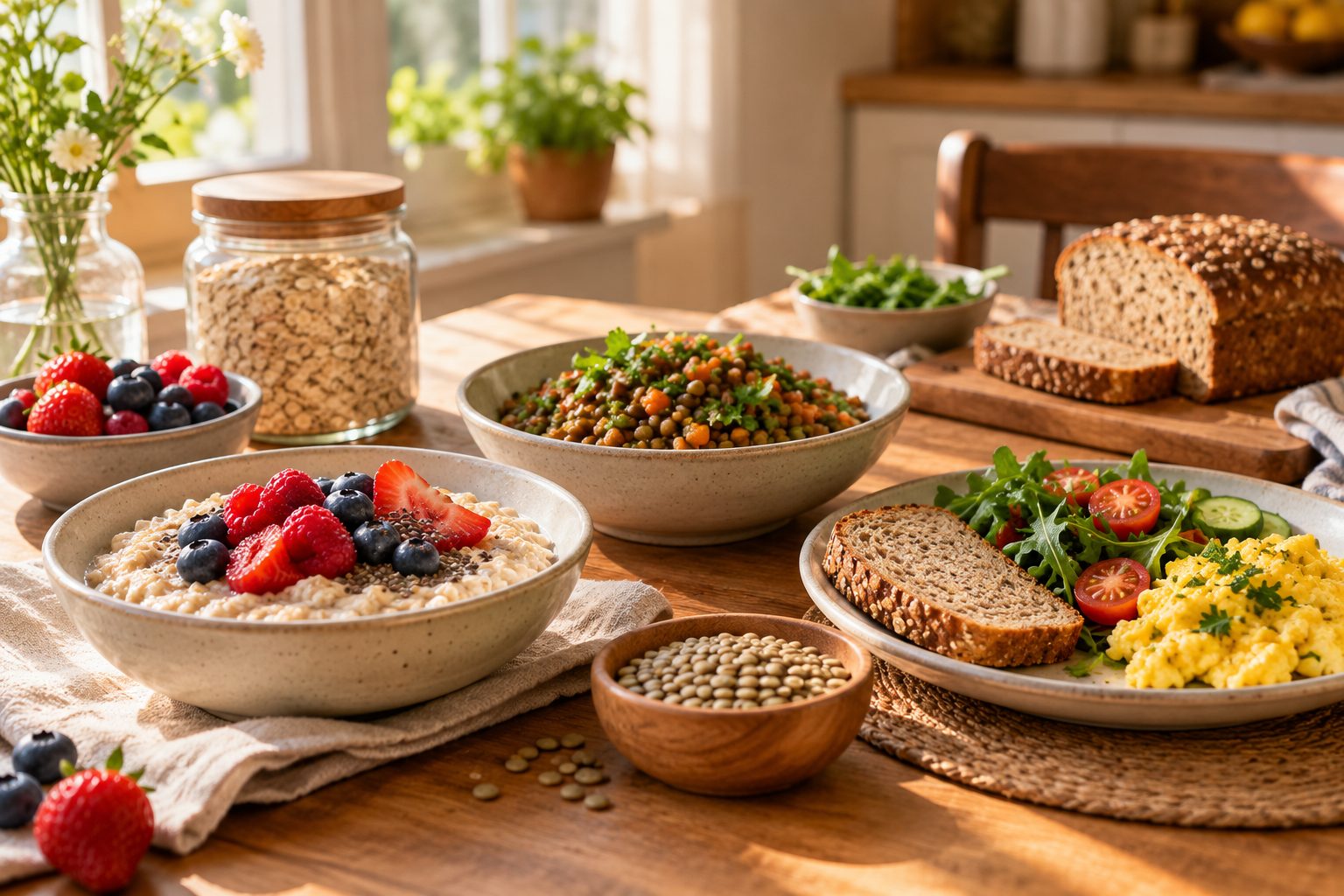
NIDDK identifies foods such as oats, whole-wheat bread, lentils, beans, fruits, vegetables, and nuts as sources of fiber. Its constipation guidance recommends increasing fiber a little at a time and drinking liquids to help fiber work. [1]
That guidance gives you a reason to avoid changing several meals at once. It also makes the learning process easier to follow. If you introduce one food, you can notice whether you enjoy it, whether it is convenient, and whether the change seems comfortable for you.
This article is a planning exercise rather than a treatment plan for digestive symptoms. Follow any individual advice you have been given about fiber or fluids. If you have ongoing concerns, a qualified clinician or dietitian can help you decide what is suitable for your circumstances.
Find one meal with room for an experiment
Think about a meal you make often. Perhaps it is toast, a bowl of cereal, a sandwich, or pasta with sauce. Write down the ingredients without grading them. You are making a map of something familiar so you can identify a small place to begin.
Now choose one possibility. You might try a different bread, include a fruit you enjoy, or add some cooked lentils to a sauce. Choose according to your taste, budget, and cooking skills. The best starting point for this exercise is the one you can picture doing.
Avoid buying several unfamiliar foods simply to make the experiment feel substantial. If you discover that you dislike a particular lentil dish, it helps to have made a modest amount. You can learn from that experience without facing a cupboard full of ingredients you do not know how to use.
Work through a familiar dinner
Imagine that pasta with tomato sauce is already part of your routine. One possible experiment is to add a small amount of cooked lentils to a portion of the sauce. Prepare them according to their instructions. Keep the rest of the meal familiar so you can judge the change clearly.
First, consider texture. Would you prefer the lentils left whole, or would a smoother sauce suit you better? Next, consider flavor. Taste the sauce and decide whether the seasoning you normally use still works. You are practicing a cooking decision, not testing whether you are good at healthy eating.
If you enjoy the result, write down what you used. If you do not, identify the problem. A texture you dislike may call for a different preparation or another food. An inconvenient cooking step may suggest a ready-cooked option. The observation should guide the next choice.
Use the package when it answers a question
Packaged foods can vary, so check the fiber amount when comparing products for this purpose. Read the serving amount too, because different serving sizes can make the numbers misleading. The FDA's guide explains how the Nutrition Facts panel relates to the amount listed. [2]
You can practice with two breads or cereals you would actually eat. Compare equivalent amounts, then look at price and taste. You might find a meaningful difference, or you might discover that your preferred products are similar. Either result helps you make a more informed purchase.
The package is only one part of the meal. A product chosen for its fiber still needs to fit your preferences and any dietary restrictions. There is no reason to force a food that does not suit you when other possibilities may be available.
Notice the experience without overinterpreting it
After trying the change, note whether it was easy to prepare and pleasant to eat. You can also pay attention to comfort. Keep your observation specific: what changed, how much did you try, and what else was different about the day?
A single observation cannot establish that an ingredient caused a symptom or improved your digestion. Your notes can still be useful when deciding whether to repeat a meal or discussing concerns with a professional. They are a record of experience rather than a diagnosis.
If you feel tempted to respond to discomfort with several new food rules, pause the experiment and seek appropriate advice. The purpose here is to build a workable routine. It does not require pushing through symptoms or eliminating more foods on your own.
Give the change a place in your routine
If your experiment works, decide where it belongs. Perhaps the lentils are useful in one particular sauce, while a different meal stays as it is. A specific place in your routine makes the idea easier to remember than a general intention to eat more fiber.
Add the ingredient to your shopping list with its purpose beside it. “Lentils for pasta sauce” is easier to act on than “buy healthier food.” If planning the shop is the difficult part, use a grocery list built around meals you actually cook.
Start with one familiar meal and one gradual change. Learn whether you enjoy it, whether it fits your day, and whether it suits your needs. You can decide on another change after that first experience gives you something useful to work with.
Sources
- [1] National Institute of Diabetes and Digestive and Kidney Diseases. Eating, Diet, & Nutrition for Constipation. Accessed November 1, 2026.
- [2] U.S. Food and Drug Administration. How to Understand and Use the Nutrition Facts Label. Accessed November 1, 2026.