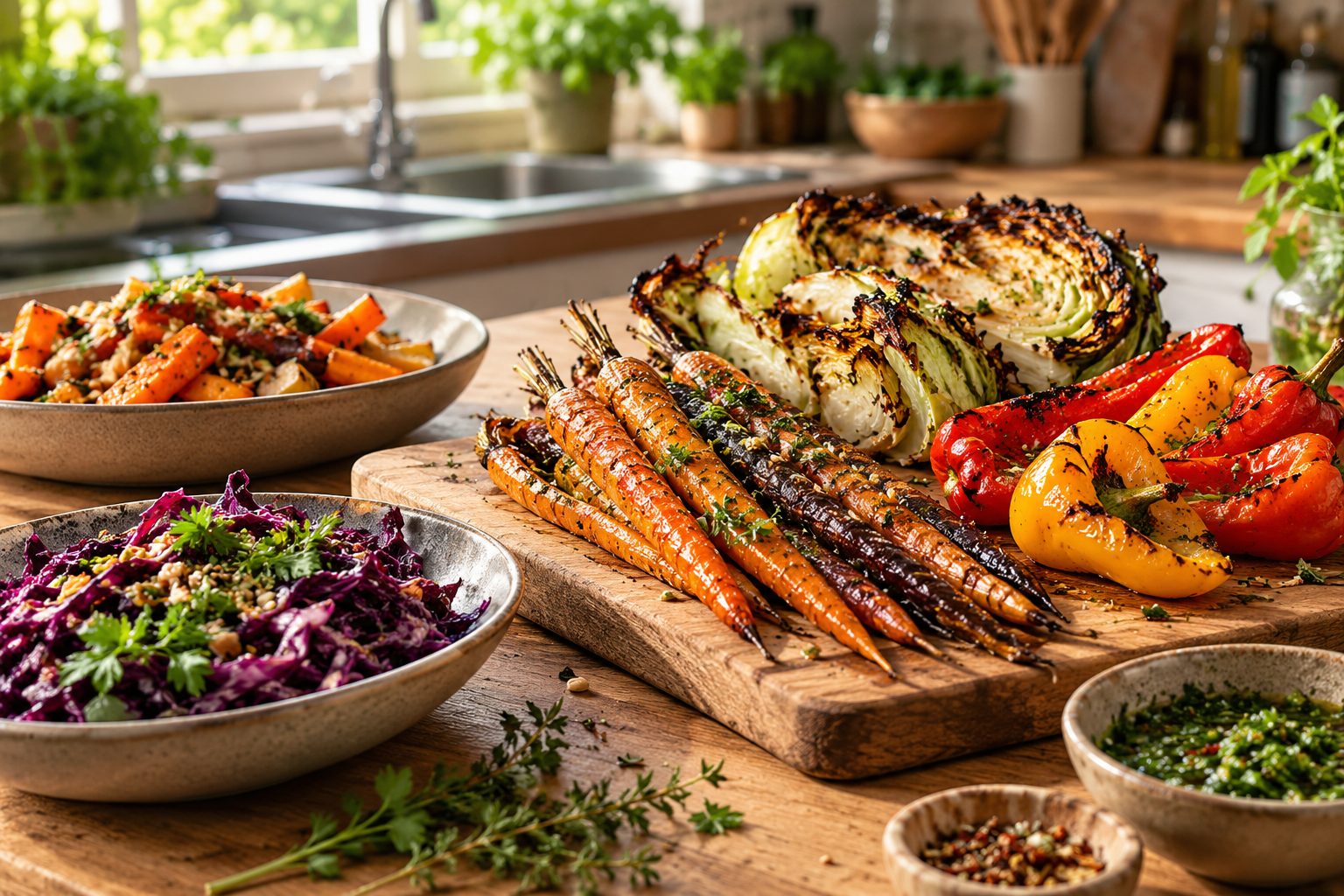
You bring home vegetables with good intentions, then find yourself avoiding them. Perhaps the broccoli reminds you of a meal you disliked. Perhaps the salad feels like a chore beside the dinner you actually want. It is tempting to decide that vegetables simply are not for you.
A more useful starting point is to get specific about the experience. Which flavor, texture, or preparation do you dislike? Learning how to eat more vegetables can begin with that question. You can explore one ingredient in a different form and decide whether it deserves a place in your meals.
Describe the part you do not enjoy
Think of a vegetable you usually leave on your plate. Try to describe it without using the word “bad.” Is it watery, bitter, stringy, too soft, or difficult to cut? Does it smell unpleasant to you? These details help separate the ingredient from the way it was prepared.
You might dislike soft carrots but enjoy a crisp texture. You might like tomatoes in sauce while disliking raw slices. There is no requirement to enjoy every version of a food. Knowing your preference gives you a more useful starting point than forcing yourself through the version you already avoid.
Also consider effort. Sometimes “I do not like vegetables” means “I do not like washing and chopping them when I am tired.” If preparation is the obstacle, a different format may be the experiment you need. Be honest about the problem so your next purchase addresses it.
Choose a familiar meal as your setting
Vegetables are included in WHO's description of a varied healthy diet. [1] To turn that general guidance into a practical choice, begin with a meal you already enjoy and ask which vegetable might belong naturally within it.
For a noodle dish, you might explore thinly sliced cabbage or cooked mushrooms. For a sandwich, you could try cucumber or roasted peppers. For a soup, you might prefer vegetables cut small or blended into the texture. These are culinary suggestions, and you can adapt them to your preferences and dietary needs.
Choose one possibility for your first attempt. The point is to learn whether that combination appeals to you. Adding several unfamiliar vegetables at once can make it harder to tell which part you liked and which part you would change.
Compare two preparations thoughtfully
Imagine that carrots are your starting ingredient. You could compare a preparation you already know with one that changes the feature you dislike. If softness is the issue, your question might be whether a firmer texture is more appealing. Use a reliable recipe and appropriate food-handling practices for the preparation you choose.
Keep the rest of the comparison simple. Serve the carrot alongside a familiar meal and use seasoning you enjoy. Taste it with curiosity rather than an obligation to finish an experiment you dislike. Ask whether the texture, flavor, or overall combination is different in a useful way.
Write down a short description. “Liked the texture, wanted more seasoning” gives you a next step. “Still disliked the flavor” may mean another vegetable would be a better starting point. You have learned something even if you decide not to repeat that particular preparation.
Choose the form that suits your kitchen
Fresh, frozen, and canned options create different practical choices. Consider what equipment you have, how much preparation you can manage, and how the ingredient will be used. Follow package directions for storage and cooking, including when a product must be cooked before eating.
If you repeatedly throw away fresh produce, look at the sequence that leads to it. Did you buy more than your meals required? Was the ingredient hidden behind something else? Did your plan depend on cooking on a day when you rarely have time?
You could buy a smaller amount, choose another format, or attach the vegetable to a specific meal on your list. Each response addresses a different problem. A useful purchase has a destination in your kitchen, rather than a vague promise that you will find something virtuous to do with it.
Let flavor belong in the plan
Think about the flavors you already enjoy in your cooking. Garlic, lemon, herbs, spices, or a familiar sauce may help you design a preparation you want to try. Choose ingredients that suit your needs and taste them as part of the whole dish.
You do not need to serve every vegetable plain to learn whether it fits your routine. At the same time, be clear about what you liked. If you enjoyed a sauce but still disliked the vegetable's texture, that observation can guide a different preparation next time.
This is also a chance to use your own food traditions. A vegetable may make more sense in a familiar stew, filling, or side dish than in a preparation borrowed from someone else's meal plan. The experiment should belong in the food you actually eat.
Build a small collection of successful choices
Keep a short note of combinations you would willingly make again. Include the preparation and the meal, such as “cabbage in noodles” or “peppers in the sandwich.” That is more useful than a list of vegetables you think you should buy.
When you plan your next shop, choose from that collection and leave room for one new idea if you want to explore. You can use a meal-based grocery list to connect each ingredient with a purpose. Over time, your list can reflect experience rather than aspiration.
Choose one vegetable, name the feature you want to change, and try a preparation that addresses it. Your next step is simply to discover one version you would be pleased to eat again.
Sources
- [1] World Health Organization. Healthy diet. Updated January 26, 2026.